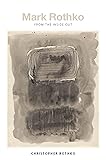
Mark Rothko
It is a glow that tells us there is content beneath the surface, and acts as an embracing invitation to turn inward. It is the window of inner light. These are also works where Rothko’s essential humanity radiates most clearly. We can feel his warm embrace, his appeal to linger and engage. And in the glow of color, we sense his deep attunement to
... See moreChristopher Rothko • Mark Rothko
achieve this, Rothko looked to communicate on the most elemental level, to appeal to core emotions, to our common, proto-rational understanding of the universe around us and our place in it.
Christopher Rothko • Mark Rothko
One of the more common manifestations is hearing viewers complain that Rothko’s work is too heart-on-sleeve. They find it almost embarrassing in its excesses of expression and emotiveness.
Christopher Rothko • Mark Rothko
Rothko sought to speak as directly as possible to our inner selves, be it in a flood or a whisper—passion dampened by as few mediators as possible. He wanted to communicate with our most core human elements; to those aspects as common to our hunter-gatherer ancestors as they will be to our successors millennia from now, whatever time-space
... See moreChristopher Rothko • Mark Rothko
There is essentially no research (at least in the English-speaking world) on the emotional impact of other components of painting that affect our visual senses, such as form, texture, or spatial treatment.
Christopher Rothko • Mark Rothko
Rothko’s painting may have undergone stylistic revolutions, but it is the same artist, the
Christopher Rothko • Mark Rothko
my father sought to remove the distractions and preoccupations of the physical realm. He wanted to shift our focus, and draw our attention to the inner world—the world of ideas and, most critically, the world of emotion.
Christopher Rothko • Mark Rothko
There is no external world here, no clear environment to grasp, no place or frame of reference. The surface seems void of content, of action, of narrative, ultimately of any cues that would tie it concretely to the world of objects. And yet these paintings are not voids.
Christopher Rothko • Mark Rothko
Although psychological theory and research on the effect of visual stimuli on our emotional state is ultimately rather general and its relevance to more complex interactions such as viewer and artwork limited, it remains important to ground ourselves in a bit of science as we consider Rothko.