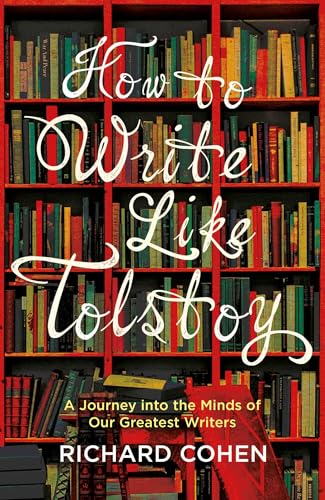
How to Write Like Tolstoy: A Journey into the Minds of Our Greatest Writers
Raymond Chandler advised, “Throw up into your typewriter every morning. Clean up every noon.”
Richard Cohen • How to Write Like Tolstoy: A Journey into the Minds of Our Greatest Writers
Perhaps aware of this, some novelists jump straight into a simple narrative—the
Richard Cohen • How to Write Like Tolstoy: A Journey into the Minds of Our Greatest Writers
Literature is littered with stories of how novelists have taken the lives of people they have met and used them for their fictions.
Richard Cohen • How to Write Like Tolstoy: A Journey into the Minds of Our Greatest Writers
While I like the Samuel Beckett line “Dance first. Think later,” when you dance with language watch your step.
Richard Cohen • How to Write Like Tolstoy: A Journey into the Minds of Our Greatest Writers
Charles Dickens would pore over the Transactions of the Privy Council lists looking for unusual names, while “Copperfield” came from a sign he noticed on a shop in a London slum.
Richard Cohen • How to Write Like Tolstoy: A Journey into the Minds of Our Greatest Writers
First-time authors especially have some things they do extremely well, some they manage effectively, and others that they are relatively poor at or are not able to do at all.
Richard Cohen • How to Write Like Tolstoy: A Journey into the Minds of Our Greatest Writers
rhyming names unless for a purpose, as they annoy readers.
Richard Cohen • How to Write Like Tolstoy: A Journey into the Minds of Our Greatest Writers
I have spent many months on a first paragraph, and once I get it, the rest just comes out very easily. In the first paragraph you solve most of the problems with your book. The theme is defined, the style, the tone. At least in my case, the first paragraph is a kind of sample of what the rest of the book is going to be.
Richard Cohen • How to Write Like Tolstoy: A Journey into the Minds of Our Greatest Writers
We are close to stream of consciousness, and that is the direction that free indirect style takes in the nineteenth and early twentieth centuries: