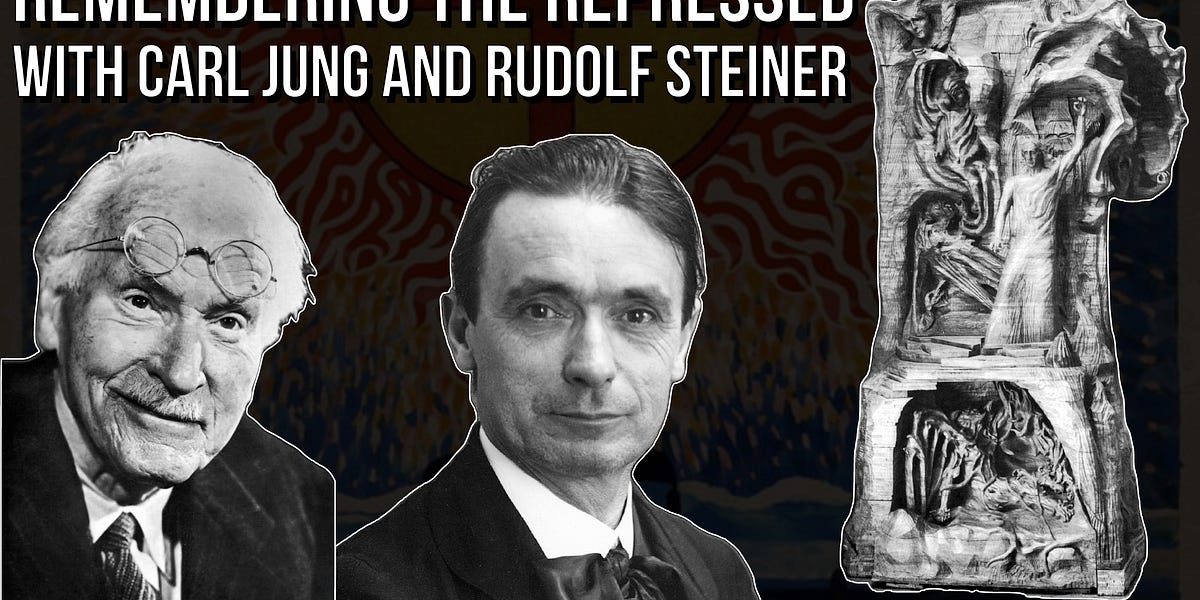
Remembering the Repressed with Carl Jung and Rudolf Steiner
Carl Jung realized that mental-balance cannot exist without a direct confrontation with the Shadow. This confrontation requires an individual to explore and acknowledge every aspect of their Shadow, no matter how grotesque it may be.
The act of simply acknowledging shadow traits, and accepting them into reality, will bring more balance to the mental... See more
Carl Jung and the Shadow: a Guide to the Dark Side of the Mind - Arts of Thought
In Carl Jung’s concept of Individuation, one must fully confront and accept their shadow self. Jung compares this journey to the fable of a hero who must confront a dragon to get to the “treasure that is hardest to obtain.” The one who is able to recognize and explore all aspects of their shadow self, while still remaining civilized, is the one who... See more
Carl Jung and the Shadow: a Guide to the Dark Side of the Mind - Arts of Thought
In my estimation, Jung’s concept of the shadow and, in particular, May’s less familiar model of the daimonic, have paved the way toward a more progressive psychology of evil. Because the daimonic stands in contrast to Peck’s premise of the demonic, it is worthwhile to examine May’s model in more detail.
Connie Zweig • Meeting the Shadow
“Whenever in a person or a work of art, an expression of spirituality came to light... [Freud] suspected it and insinuated that it was repressed sexuality.” Jung couldn’t accept Freud’s mechanistic view of humanity