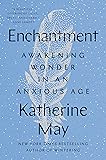
Enchantment
1976 book, The Origin of Consciousness in the Breakdown of the Bicameral Mind, he argues that our ability to introspect—to examine our conscious thoughts and feelings—arrived in relatively recent history, around the second millennium BCE. Before then, our mind was bicameral, two-chambered. “At one time,” he says, “human nature was split in two, an
... See moreKatherine May • Enchantment
As a child, I would look out of the window on a nighttime drive and think the moon was following us. From my vantage point, she seemed to be chasing us along the sky, breathlessly trying to keep up.
Katherine May • Enchantment
Everything about this time conspires to make us feel so very small.
Katherine May • Enchantment
we misunderstand play itself, casting it as exuberant, silly, a frippery that signals to us that our children are still young enough to have not yet turned their minds to more weighty endeavours. But play is serious. Play is absolute. Play is the complete absorption in something that doesn’t matter to the external world, but which matters
... See moreKatherine May • Enchantment
We seem trapped in a grind of constant change without ever getting the chance to integrate it.
Katherine May • Enchantment
Enchantment came so easily to me as a child, but I wrongly thought it was small, parochial, a shameful thing to be put away in the rush towards adulthood. Now I wonder how I can find it again. It turns out that it had nothing to do with beauty after all—not in any grand objective sense. I think instead that when I was young, it came from a deep
... See moreKatherine May • Enchantment
numinous
Katherine May • Enchantment
More often than not, I find that I already hold all the ideas from which my enchantment is made.
Katherine May • Enchantment
A kind of atavistic urge lives inside us, an impulse to imbue places with magical meaning, to make them into hallowed ground.