Saved by Shamin and
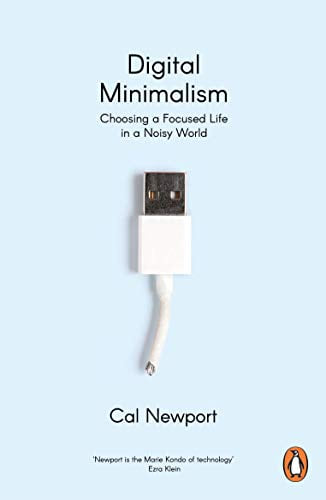
Digital Minimalism: Choosing a Focused Life in a Noisy World
PRACTICE: TAKE LONG WALKS
Cal Newport • Digital Minimalism: Choosing a Focused Life in a Noisy World
philosophy of technology use,
Cal Newport • Digital Minimalism: Choosing a Focused Life in a Noisy World
what you need instead is a full-fledged philosophy of technology use, rooted in your deep values, that provides clear answers
Cal Newport • Digital Minimalism: Choosing a Focused Life in a Noisy World
Simply tell people close to you that you check texts several times a day, so if they send you something, you’ll see it shortly, and that if they need you urgently, they can always call you (it’s here that you should configure your Do Not Disturb mode settings to let in calls from a favored list). This response calms any legitimate concerns about
... See moreCal Newport • Digital Minimalism: Choosing a Focused Life in a Noisy World
Principle #3: Intentionality is satisfying.
Cal Newport • Digital Minimalism: Choosing a Focused Life in a Noisy World
As Socrates explained to Phaedrus in Plato’s famous chariot metaphor, our soul can be understood as a chariot driver struggling to rein two horses, one representing our better nature and the other our baser impulses. When we increasingly cede autonomy to the digital, we energize the latter horse and make the chariot driver’s struggle to steer
... See moreCal Newport • Digital Minimalism: Choosing a Focused Life in a Noisy World
“Whatever we’re hoping to see, it never quite meets that bar.”
Cal Newport • Digital Minimalism: Choosing a Focused Life in a Noisy World
Does this technology directly support something that I deeply value? This is the only condition on which you should let one of these tools into your life. The fact that it offers some value is irrelevant—
Cal Newport • Digital Minimalism: Choosing a Focused Life in a Noisy World
seminal book, Solitude: A Return to the Self. As Storr noted, by the 1980s, psychoanalysis had become obsessed with the importance of intimate personal relationships, identifying them as the most important source of human happiness. But Storr’s study of history didn’t seem to support this hypothesis. He opens his 1988 book with the following quote
... See more