Saved by Evie May and
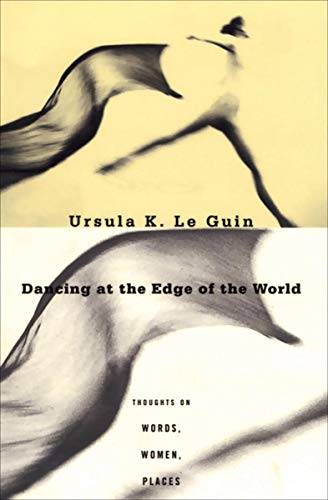
Dancing at the Edge of the World: Thoughts on Words, Women, Places
A special note to the above: If the writer is a socially privileged person—particularly a White or a male or both—his imagination may have to make an intense and conscious effort to realize that people who don’t share his privileged status may read his work and will not share with him many attitudes and opinions that he has been allowed to believe
... See moreUrsula K. Le Guin • Dancing at the Edge of the World: Thoughts on Words, Women, Places
Mr. Hudson’s summary of the material is elegant, and his interpretation of it is, I take it, Freudian. Dreamwork is rationalization, therefore it is falsification: a cover-up. The mind is an endless Watergate. Some primitive “reality” or “truth” is forever being distorted, lied about, tidied up. But what if we have no means of access to this truth
... See moreUrsula K. Le Guin • Dancing at the Edge of the World: Thoughts on Words, Women, Places
No house worth living in has for its cornerstone the hunger of those who built it.
Ursula K. Le Guin • Dancing at the Edge of the World: Thoughts on Words, Women, Places
Abstractions about right and wrong, whether they are as old as Thou Shalt Not Kill or as modern as Do Your Own Thing, very often serve only to confuse and weaken genuine moral decision.
Ursula K. Le Guin • Dancing at the Edge of the World: Thoughts on Words, Women, Places
Secondhand experience breaks down a block from the car lot.
Ursula K. Le Guin • Dancing at the Edge of the World: Thoughts on Words, Women, Places
Writers have to get used to launching something beautiful and watching it crash and burn.
Ursula K. Le Guin • Dancing at the Edge of the World: Thoughts on Words, Women, Places
When we look at what we can’t see, what we do see is the stuff inside our heads. Our thoughts and our dreams, the good ones and the bad ones. And it seems to me that when science fiction is really doing its job that’s exactly what it’s dealing with. Not “the future.”
Ursula K. Le Guin • Dancing at the Edge of the World: Thoughts on Words, Women, Places
Even without identifying narration with falsification, one must admit that a vast amount of our life narration is fictional—how much, we cannot tell.
Ursula K. Le Guin • Dancing at the Edge of the World: Thoughts on Words, Women, Places
He is not my wife; but he brought to marriage an assumption of mutual aid as its daily basis, and on that basis you can get a lot of work done.