Saved by Nina Goodheart and
Are chatbots of the dead a brilliant idea or a terrible one? | Aeon Essays
This shift from chatbotsas companions to tools of artistic remembrance deflates many common concerns. From this vantage point, we can see that chatbot ‘actors’ do not necessarily aim at realism. They cannot and will not capture a deceased person fully. They do not delude users into behaving as if the dead are still alive or believing that they are... See more
Amy Kurzweil • Are chatbots of the dead a brilliant idea or a terrible one? | Aeon Essays
This feels naive — how could any engineer possibly guarantee that a user will not emotionally imprint onto a chatbot? Especially if that emotional attachment is explicitly what the grieving user is seeking?
There is no one way to design a chatbot ‘actor’ because there is no best or definitive perspective on a person, no best or definitive fictional world in which to encounter someone’s legacy. There are countless useful, informative, intriguing, funny, strange, beautiful perspectives that a chatbot ‘actor’ might stage, just as there are countless ways... See more
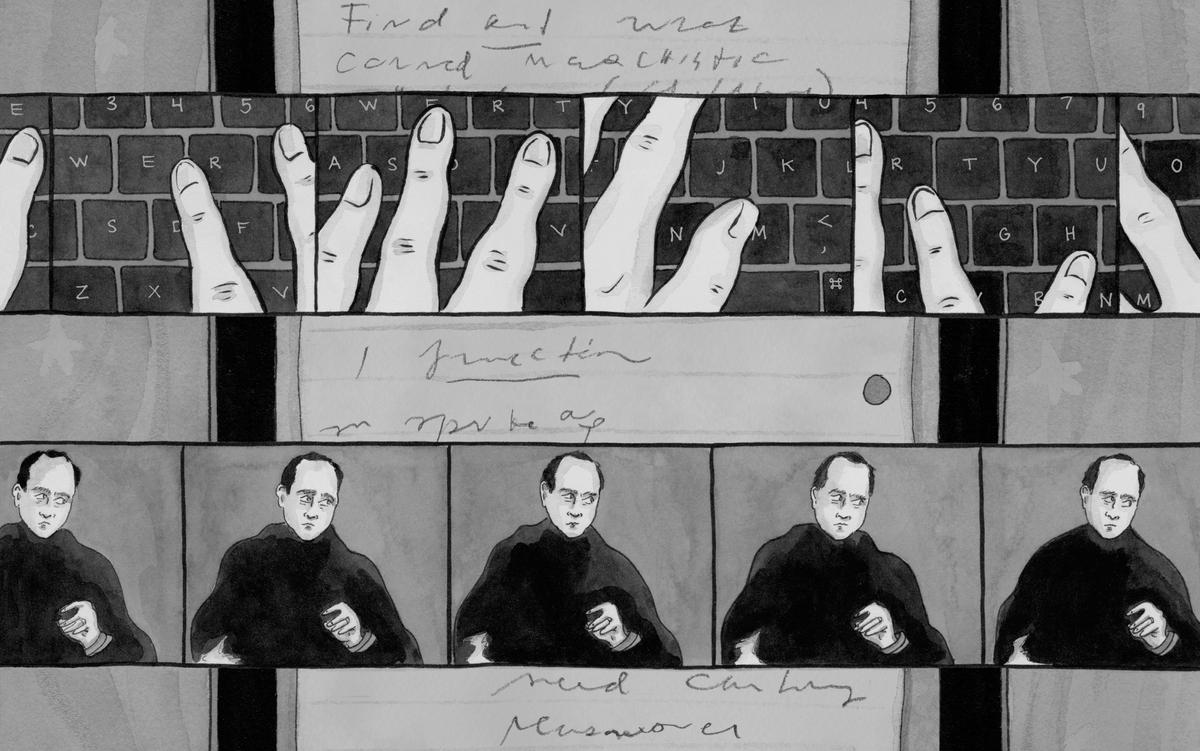
Amy Kurzweil • Are chatbots of the dead a brilliant idea or a terrible one? | Aeon Essays
It is also why we should be suspicious of technology companies that offer us easy, prefabricated, supposedly complete chatbots. We should instead seek technology that enables us to create and fine-tune our own chatbots – without requiring extensive technical expertise. There are no shortcuts to thoughtful representations.
Amy Kurzweil • Are chatbots of the dead a brilliant idea or a terrible one? | Aeon Essays
Any griever, or any student of history, knows that relationships don’t end neatly with death; memories, imaginings, questions and answers continue to churn in the minds of the living, aided by artefacts and shared community. The secular space where we allow this reality to flourish is the arts.
Amy Kurzweil • Are chatbots of the dead a brilliant idea or a terrible one? | Aeon Essays
And so, the builder of this chatbot is forced to ask difficult questions about the deceased that call for care and attention: how do I want to remember them? How should a person be remembered? The deliberative effort that goes into building a chatbot highlights that the end product is a representation, inflected with the creator’s choices and... See more
Amy Kurzweil • Are chatbots of the dead a brilliant idea or a terrible one? | Aeon Essays
The more detailed, specific and multi-modal our prompts and props, the closer the imagined representation of a past person may be to the once-living person.
But a representation will always remain a representation – regardless of its accuracy.
Amy Kurzweil • Are chatbots of the dead a brilliant idea or a terrible one? | Aeon Essays
Because chatbots are not people but props that help us generate imaginary conversations, the user’s interlocutor – a character based on the deceased – does not exist independently of the conversation. Chatbot users create their imaginary interlocutors through their interactions with their prop chatbots. In this way, chatbots bestow a special form... See more
Amy Kurzweil • Are chatbots of the dead a brilliant idea or a terrible one? | Aeon Essays
Another worry relates to chatbots’ lack of inner lives. Critics, like the philosopher Shannon Vallor in The AI Mirror (2024), argue that there is something defective about emotional bonds with entities that cannot reciprocate affection or interest, about love that is kept alive by ‘the economic rationality of exchange’ rather than a more precarious... See more
Amy Kurzweil • Are chatbots of the dead a brilliant idea or a terrible one? | Aeon Essays
In Book 11 of Homer’s Odyssey, also known as the Nekyia (or Book of the Dead ), Odysseus journeys to the underworld and finds his dead mother, Anticlea, who has become a shade – a spirit he cannot embrace.